When the Sky Opens, Follow the Glass: A Sheltered Stroll from Piccadilly to Covent Garden
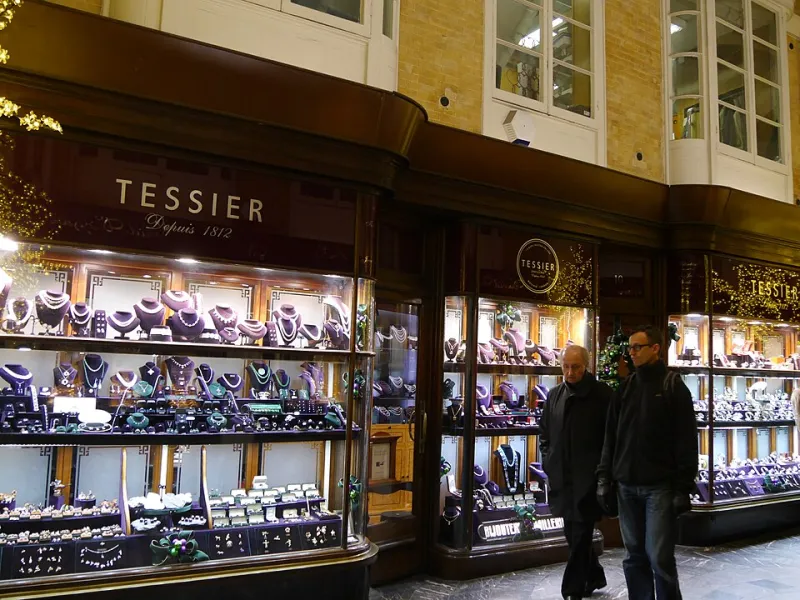
Photo: Edwardx, CC BY-SA 4.0, via Wikimedia Commons
London rain rarely means a cancelled walk. It just means a different one. This route trades open squares for glass roofs, pavement for polished stone and long views for shop windows, threading together some of the West End's least celebrated covered passages. It runs from Piccadilly Circus to Covent Garden, uses three historic arcades as its anchors and accepts one honest truth: no walk in central London is completely dry. You will still need an umbrella for the short hops between shelters. But you will spend most of the afternoon under cover, and you will see a side of the West End that most people hurry past.
The Route at a Glance
Start at Piccadilly Circus Underground station and finish at Covent Garden piazza. Allow 90 minutes to two hours, plus time for coffee or a browse. The walking is flat and step-free apart from shop thresholds. The order is simple: Burlington Arcade, Princes Arcade, Piccadilly Arcade, Jermyn Street, St James's Church, then a short dash via Haymarket and Leicester Square to Covent Garden's market building. There is an optional detour to the Royal Arcade off Old Bond Street if you want one more glass roof.
This is not a tunnel. Think of it as a string of shelters joined by brief showers. The longest exposed stretch is the final push from Leicester Square into Covent Garden, so save your umbrella for that.
First Shelter: Burlington Arcade
Leave Piccadilly Circus by the Piccadilly north-side exit and walk west. Burlington Arcade sits at No. 51 Piccadilly, its entrance easy to miss if you are looking at the traffic. Step inside and the city changes register: the noise drops, the light softens and the floor becomes a long ribbon of stone.
Opened in 1819, Burlington Arcade was built for Lord George Cavendish, who owned Burlington House next door. The story goes that he was tired of people throwing oyster shells over his garden wall. The arcade was designed by Samuel Ware as a tidy, covered shopping street, and it has been policed ever since by beadles in tailcoats. They are not actors. They enforce the arcade's rules, which have historically banned whistling, singing, playing instruments and other behaviour deemed unsuitable for a genteel shopping street.
That tells you something important about these passages. They were not public rights of way. They were private property dressed as public streets, open to respectable shoppers but controlled by owners who cared about tone. Women could browse without mud up to their hems. Men could be seen without braving the weather. The glass roof made shopping a spectator sport.
Walk the full length to Burlington Gardens, then double back. There is no shame in treating the arcade as a loop.
The Quiet Middle: Princes and Piccadilly Arcades
Continue west along Piccadilly to Princes Arcade, a smaller and much quieter passage that links Piccadilly with Jermyn Street. It opened in the 1880s and has the feel of a shortcut that has never quite sought attention. The shopfronts are compact, the ceiling is intimate and the traffic noise fades within a few steps. Use it as a breather between the better-known Burlington and the polished Piccadilly Arcade further west.
Piccadilly Arcade opened in 1910 and runs from Piccadilly through to Jermyn Street. Look for the statue of Beau Brummell near the Jermyn Street end, a dandyish nod to the arcade's tailoring neighbours. The arcade is short but elegant, with curved shopfronts and a glass roof that turns a grey sky into something almost theatrical. It is also a useful reminder that these passages were retail inventions first and tourist sights second. They were built to make shopping pleasant, not to be photographed.
If you want the optional detour, walk west to Old Bond Street and slip through the Royal Arcade, opened in 1879. It is a little out of the way, but it adds another layer to the story: by the late Victorian period, the covered arcade had become a standard West End type, copied and refined wherever smart shops wanted shelter and display.
From Glass Roof to Market Roof
Exit Piccadilly Arcade onto Jermyn Street. This is where the walk becomes a normal London stroll again, but a good one. Jermyn Street is lined with old shopfronts, cheesemongers and shirtmakers, and it runs parallel to Piccadilly in a way that feels pleasantly secret. Turn east towards St James's Church, a Christopher Wren church rebuilt after the Blitz, and pause under the portico if the rain has set in.
From here, head east towards Haymarket and Leicester Square. This is the exposed section. It is short, but it is not covered, so put the umbrella up and walk briskly. Cross into Covent Garden via Cranbourn Street or Long Acre, and aim for the market building. The iron-and-glass market hall, first built in the 1830s, is the final shelter and the perfect end point: a covered Victorian trading floor that now holds shops, stalls and the occasional street performer.
Practical Notes for a Wet Saturday
Start after 10am if you want shops open, but before midday if you want the arcades quieter. Burlington Arcade is busiest around lunchtime and on dry weekends, when it becomes a thoroughfare. In heavy rain, it fills quickly. Piccadilly Arcade and Princes Arcade are usually calmer.
Check opening hours before making a special trip. Arcades are shopping streets first, and some shops close on Sundays or bank holidays. The route works best as a loose plan rather than a rigid timetable. If one passage is crowded, walk through it and come back later. If a shop tempts you, go in. The point of a covered walk is that you have nowhere urgent to be.
Where to Pause Without Breaking the Spell
Fortnum & Mason, opposite Piccadilly Arcade, is the obvious tea stop, though it is not a secret and not cheap. For something quieter, try the side streets around Jermyn Street or push on to Covent Garden and eat in the market building. St James's Church is a good free pause if it is open, and the arcades themselves offer plenty of window-shopping shelter without requiring you to buy anything.
The walk ends near Covent Garden station, Charing Cross and Leicester Square, so you can leave easily when the weather wins. But if the rain is still coming down, you can always walk the arcades in reverse and start again. London's covered passages were built for exactly this kind of day: not to stop the rain, but to make it someone else's problem for half an hour.