Small Cups, Big Ideas: A City Walk Through the Alleys That Brewed Modern London
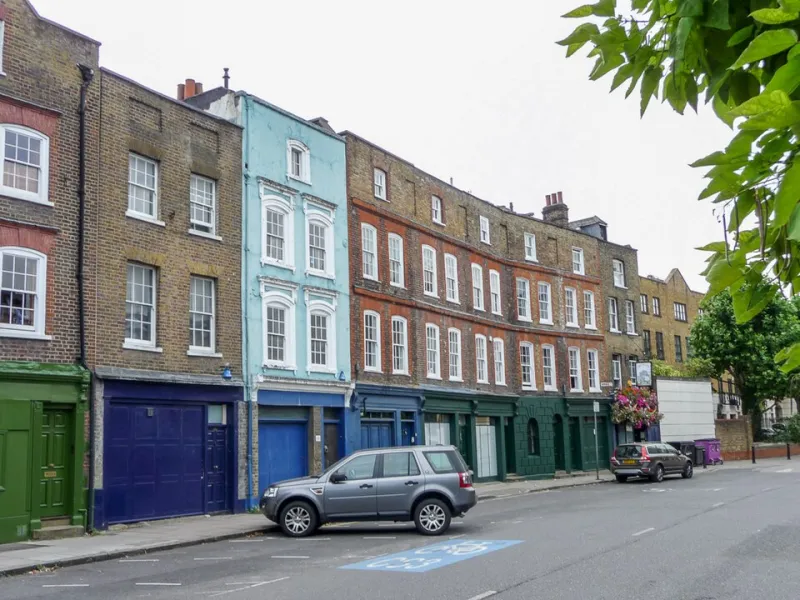
Photo: Christine Matthews , CC BY-SA 2.0, via Wikimedia Commons
London has a habit of hiding its biggest ideas in its smallest spaces. The City’s alleyways are a case in point: narrow, shadowed, easy to miss, and yet some of them once held rooms that changed how Britain did business. This walk follows the old coffee-house quarter from St Michael’s Alley to Exchange Alley, a route of barely a mile and a half that takes in plaques, pubs, churchyards and the faint ghost of a seventeenth-century craze.
The craze was coffee. When it arrived in London in the 1650s, it was treated with suspicion, taxed as a novelty and sold in tiny cups that looked more like medicine than pleasure. But the real attraction was not the drink. It was the room around it.
Start at St Michael’s Alley: the first cup
Begin outside St Michael’s Church on Cornhill, where the alley slips down beside the churchyard. This is the spot usually credited with London’s first coffee house, opened in 1652 by Pasqua Rosée, a Greek servant working for a merchant named Daniel Edwards. Rosée set up in a shed-like premises in St Michael’s Alley and began selling coffee to curious locals. It was not an instant hit with everyone. Alehouses grumbled, pamphleteers warned of Turkish habits, and some husbands complained that their wives were spending too long in places where men talked politics.
But the coffee house offered something pubs did not: sobriety. You could stay sharp, read the news, hear the latest shipping report and argue about religion without falling over. For a penny admission, you gained access to conversation, newspapers and company. That is why these places earned the nickname ‘penny universities’ — a cheap seat at a rough-and-ready school of the world.
Stand at the top of the alley and look down. The scale is the point. This was never a grand boulevard of ideas. It was a service lane that happened to be a few steps from the Royal Exchange, close enough to draw merchants, brokers and curious idlers. The Jamaica Wine House now occupies part of the site, a Victorian pub with a much older story under its feet. It is a good place to pause and picture the original room: smoke, steam, wooden benches, hats crowded together, a boy reading aloud from a newssheet.
Exchange Alley: where gossip became money
From St Michael’s Alley, head west to Exchange Alley, also called Change Alley, which runs between Cornhill and Lombard Street. If St Michael’s Alley gave London its first taste of coffee, Exchange Alley gave the drink its commercial teeth.
By the early eighteenth century this narrow passage was packed with coffee houses: Jonathan’s, Garraway’s, Elford’s and others. Each had its own personality. Jonathan’s became famous for stock dealing, so much so that the business of buying and selling shares spilled out of the coffee room and into the alley itself. Brokers shouted prices under the windows; jobbers worked the crowd; rumours moved faster than the official post. The South Sea Bubble of 1720 was fuelled by exactly this kind of alley-level speculation, with fortunes promised and lost before the coffee had gone cold.
Garraway’s, meanwhile, was known for auctions and for a slightly more polished trade in tea, spices and wines. Lloyd’s Coffee House, though not in this exact alley for its whole life, belongs to the same story: shipowners and merchants met over cups, shared shipping news, and gradually built the insurance market we now know as Lloyd’s of London. It is a strange thought that a global industry grew out of men comparing voyage notes in a room that smelled of roasted beans.
Walk slowly. Exchange Alley is not long, but it rewards looking up. The buildings are later than the coffee houses, of course. The Great Fire of 1666 and decades of rebuilding swept away most of the original fabric. What survives is the line of the lane, the habit of crowding commerce into narrow cuts between bigger streets, and a handful of plaques and pub signs that keep the memory alive.
What was said over the cups
Coffee houses were not simply cafés. They were theatres of information. A man could hear a pamphlet read aloud, inspect a ship’s manifest, listen to a scientist, or pick up a rumour about war with France. Charles II tried to suppress them in 1675 because he feared the political talk they encouraged; the proclamation was withdrawn within days. The authorities had discovered what Londoners already knew: once people get used to arguing in public, it is hard to put the lid back on.
The lanes around Cornhill and Lombard Street became a kind of early newsroom and trading floor rolled into one. Stock prices, insurance rates, shipping arrivals and political scandal all circulated through the same small rooms. The modern City likes to think of itself as a place of glass towers and screens. This walk is a reminder that its older operating system was wooden chairs, hot drinks and loud conversation.
Map notes for the walk
Start at St Michael’s Church, Cornhill (nearest stations: Bank and Monument). Walk down St Michael’s Alley, then turn right and thread through to Exchange Alley, heading south towards Lombard Street. The core route is short — under a mile — but allow an hour and a half to two hours if you want to read plaques, look at the Royal Exchange, and stop for a drink. It is entirely flat and mostly pedestrian, though the alleys are narrow and not always obvious from the main road.
A simple extension is to walk east along Lombard Street towards Gracechurch Street, where Lloyd’s’ older associations cluster, or west to the Royal Exchange and Bank. The City is unusually quiet at weekends, which makes the lanes feel secretive but also means some cafés and pubs keep shorter hours. Weekday lunchtimes are busier and more atmospheric if you want a sense of the old bustle, though you will be sharing the pavements with office workers.
Coffee, then and now
Modern coffee stops are easy to find around Cornhill, the Royal Exchange and Leadenhall Market, though the City is not short of chains. For a more characterful pause, the Jamaica Wine House is the obvious historic choice, and there are independent cafés a short walk away towards Bow Lane and St Paul’s. The irony is unavoidable: you can now pay far more than a penny for a flat white in the same district where coffee first became a cheap ticket to an argument.
End your walk back on Cornhill and look towards the Royal Exchange. The coffee houses are gone, but the pattern remains. London still does its deals, spreads its rumours and tests its ideas in crowded rooms and narrow lanes. The beans simply changed hands.