Booed, Cheered, Then Buried: Walking the Line Between London's Two Lost Theatre Districts
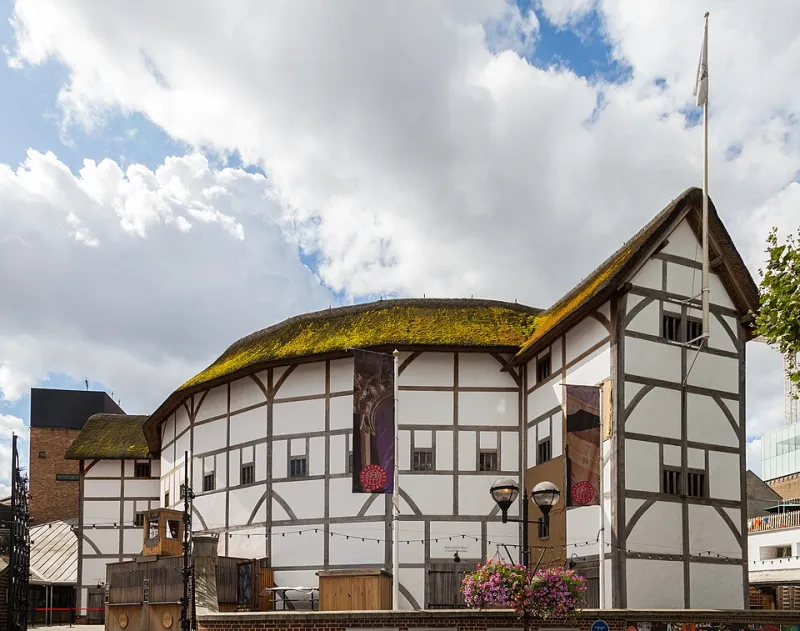
Photo: Diego Delso, CC BY-SA 4.0, via Wikimedia Commons
There's a pleasing absurdity to it. The two most important addresses in English drama sat in a suburb and a marsh, in buildings that were rented, knocked up quickly and pulled down almost as fast — and today you can walk between them in an afternoon, with time for a coffee and a pint. This is the route from Shoreditch, where the whole business kicked off in the 1570s, to Bankside, where it went out with a bang in the 1640s.
Bring sensible shoes. Bring a decent coat. And bring the mental picture of a crowd: no seats at the back, no interval ice cream, and a good chance of rain falling on your head.
Why the playhouses ended up out here
The City wasn't keen. Playhouses were associated with big crowds, loose behaviour and the spreading of plague, and the City Corporation's attitude to all three was roughly that of a man who has just had his carpets cleaned. So the theatres went where the City's writ stopped running — into the liberties and suburbs beyond the walls.
Shoreditch's patch was the precinct of the dissolved Augustinian nunnery of Holywell, and Bankside was the Liberty of the Clink, attached to the bishops of Winchester. Both were technically exempt from City control. Both, conveniently, had room for very large buildings.
Start: Shoreditch High Street Overground
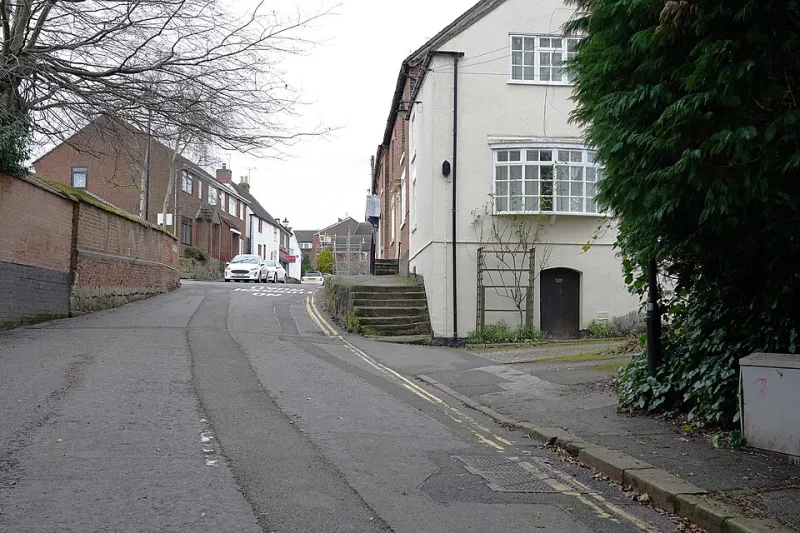
Come out of the station and head for Curtain Road. The name is a lovely piece of confusion that has survived four centuries: it doesn't come directly from the theatre, but from a curtain wall of the old priory. The theatre, in turn, took its name from the field it stood in — Curtain Close. Two layers of history in one street sign, and most of Shoreditch cycles past it without a glance.
James Burbage built The Theatre here in 1576 — the first purpose-built playhouse in England since the Romans. It was a timber amphitheatre, round or polygonal, thatched, and it had a difficult relationship with its neighbours, who complained about noise, crowds and blocked streets. Some of that Shakespearean fame is genuinely recent — but the arguments feel extremely contemporary.
A short hop to the corner of New Inn Yard and Great Eastern Street, and a plaque marks the general spot of Burbage's building. Look up at what's there now and enjoy the collision: glass, hoardings, a bit of street art. This stretch is also where a 2010s excavation uncovered the remains of the Curtain, the second Shoreditch playhouse, built in about 1577 and probably the first place Romeo and Juliet was performed. Its brick foundations and gravel yard surface were found under a yard off Curtain Road, and provision was made to keep them in the basement of the new development. Whether you can actually see them on a Sunday morning is another matter — check the local listings before you build the day around it.
Optional detour, ten minutes: up to St Leonard's, Shoreditch. Burbage is buried here, and so is his son Cuthbert, the man who did the accounting. It's a strange, high, quiet church in a very unquiet parish, and worth five minutes of anyone's time.
Two minutes on the greatest property transaction in theatre history
When the lease on The Theatre ran out in 1598 and negotiations went sour, the Burbage company did something magnificently petty. They took the building down, plank by plank, and carried the timber across the Thames in the dead of winter to build something new.
That timber became the Globe. In other words, the walk you're doing now isn't a comparison between two theatre districts. It's the physical route of a single dismantled building, moved south in a cart.
Coffee stop, Shoreditch
You've earned it. Curtain Road and its offshoots are dense with small roasteries and cafés — pick one with a window seat and watch the Saturday market traffic fold itself into knots. This is the point in the day where the walk stops being about facts and becomes about the gap between what the street looks like and what it once was.
Crossing the river
Hop on the Overground or walk down to Liverpool Street and pick up the Circle line to London Bridge. Purists can walk the whole way via Tower Bridge, adding about forty minutes and a lot of crowds.
Whatever you do, get off at London Bridge and walk west along the river. The Victorian warehouse frontage on Clink Street hides the key to the whole story — Winchester Palace, the bishops' London pad, with its surviving rose window and the great hall's gable. The bishops, as landlords, were the reason theatre could happen here at all. Theatregoers walked in past the same wall you're now photographing.
Park Street: the Rose, still down there
Park Street used to be Maiden Lane, and off it runs Rose Court. In 1989 the Museum of London dug it up before a building went ahead and found the unmistakable footprint of The Rose: the brick piers, the push of three centuries of mud, and a red clay floor. Never mind the romantic stories — this was a shoddy, cheap building that Henslowe patched and extended, and knowing that makes it better, not worse.
Not all of the remains were lost. Some were preserved in place, and a small viewing area on Park Street allows you to look down into the dark where the groundlings stood. Access is limited and depends on arrangements made with the site's custodians, so build in flexibility. Even from the pavement, the thought of it — a cellar of air under a modern building, holding a circle of bricks — is worth the trip on its own.
The Globe that isn't there
A hundred metres on, at Anchor Terrace, is the other half of the story. The original Globe was excavated in 1989 too, in a car park, and its foundations apparently extend beneath and around that elegant early nineteenth-century terrace. It isn't open, and you shouldn't expect to see anything except the building itself and an explanatory reminder of what lies beneath.
What you can do — and should — is carry on a couple of hundred metres to Shakespeare's Globe, built in 1997 on a site close to, but not exactly on, the original. Walk round to the back, look at the oak, the lime plaster and the thatched roof, and then remind yourself that the real thing burnt down in 1613 during Henry VIII, when a stage cannon fired wadding into the thatch and set it going in under an hour. It was rebuilt, closed by Parliament in 1642, and finally demolished to make room for tenements in the 1640s.
Bear Gardens and the end of the line
Finish on Bear Gardens, the street name that gives the whole area away. The last playhouse on this bank, The Hope, opened in 1614 and was built to do double duty as a theatre and a bear-baiting ring. Its prints show a moveable stage and a removable roof — adaptability that would impress any modern venue manager. It's the least famous of the Bankside houses and, in a strange way, the most modern.
A pint to finish
The Anchor, the Old Thameside Inn and the Market Porter over at Borough all do the job, and the George Inn on Borough High Street is a galleried coaching inn that survives from 1676 — a generation after the theatres closed, but close enough in spirit. Take your drink outside, face the water, and consider that the crowd you're part of is now mostly taking selfies where the groundlings once threw nutshells at the stage.
Different audience. Same river. Same mud.
Route at a glance
- Start: Shoreditch High Street Overground
- End: Bankside / London Bridge
- Distance: about 2.5 miles with a short Tube hop in the middle; nearer 3.5 if you walk all the way
- Time: 2.5–3 hours at a proper dawdle
- Best day: Sunday morning, before the market and the Globe queue arrive
- Bring: a charged phone (for the plaques), a coat, and low expectations about seeing actual ruins
The truth about Elizabethan theatreland is that almost nothing survives above ground. What's left is a set of street names, a handful of cellars and a long, patient argument between what our cities bury and what they quietly decide to remember. Walking the route from Shoreditch to Bankside is a decent way of taking sides.