Low Sun, Long Shadows: A Solstice Walk Along London's East–West Streets
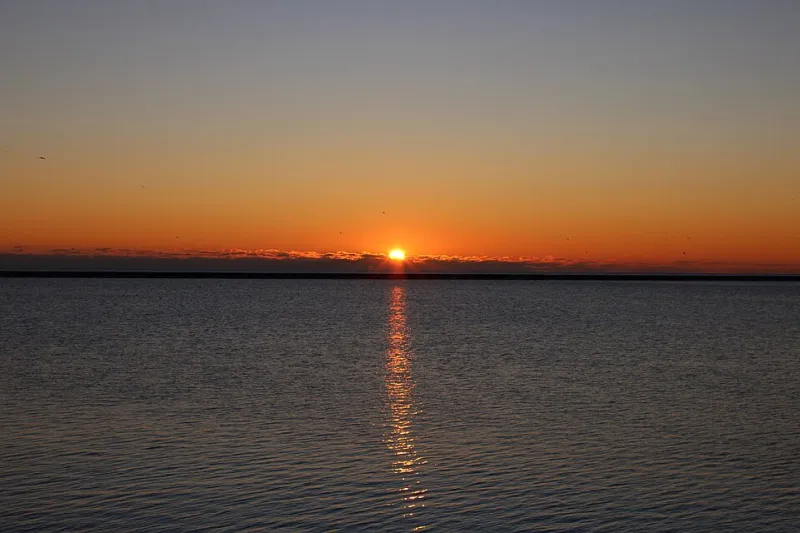
Photo: Michael Barera, CC BY-SA 4.0, via Wikimedia Commons
On 21 December 2026 the sun rises over London at 08:04 and sets at 15:53. That is seven hours and forty-nine minutes of daylight, and most of it arrives at a slant. The solstice itself falls at 20:50 GMT, long after the light has gone. For a few hours, though, the city's east–west streets do something they do not do in June: they catch the sun head-on.
This is a walk for that day, or for the nearest weekend if you prefer not to take a Monday off. It comes in two short legs, one at dawn and one at dusk, with a warm pub in between. The route runs from St Paul's to Cornhill in the morning and from Ludgate Hill to Temple Bar in the afternoon. It is not a march. It is a way of looking.
Why the low sun matters
Medieval churches were built on an east–west axis, with the chancel at the east end, facing the sunrise. Streets followed property lines, market places and, in places, the line of Roman roads. The result is a city with a strong east–west grain, especially through Cheapside, Cornhill and Fleet Street.
At the solstice the sun rises in the south-east and sets in the south-west. It does not run straight down the street like a laser. It grazes the ends, lights the south-facing brickwork, and throws shadows that are four or five times the height of the object casting them. Stand at the right end of the right street and you can see how a medieval Londoner would have read the year: not from a calendar, but from where the light landed on a wall.
The dawn leg: St Paul's to Cornhill, 07:30–09:00
Arrive at St Paul's Churchyard at about 07:30. It will still be dark, or nearly so. The cathedral's west front is the obvious landmark, but for sunrise you want the east end. Walk round to the east side of the churchyard and look down Cheapside. The street runs roughly east–west, and the sun will come up to the left of the axis, over the roofline.
Stop 1: St Paul's Cathedral. The present building is east–west, like its medieval predecessors. The altar is at the east end; the great west door faces the setting sun. Stand on the churchyard pavement and trace the line of the roof against the sky. At 08:04 the light arrives, and the cathedral's south side catches it first.
Stop 2: Cheapside. Walk east. Cheapside is the old market street, its name from the Old English ceap, meaning bargain. The street is wide because it once held stalls, and straight because it followed a property line that everyone agreed on. At this hour the sun is behind you, throwing your shadow down the street towards the Bank.
Stop 3: St Mary-le-Bow. Turn off Cheapside for a moment. The church's bells defined who was a Cockney, and its curfew bell once told the City when to put the fire out and go to bed. The church is oriented east–west, like every medieval church worth its salt. Look at the way the tower sits slightly askew from the street: the building line and the sacred line are not quite the same thing.
Stop 4: St Peter upon Cornhill. Tradition claims this as London's oldest church site, founded by King Lucius in the second century. That is legend rather than fact, but the site is ancient, and the east–west axis is unmistakable. By now the sun is up properly, though still low enough to light the upper windows of the buildings on the south side of the street.
Finish with coffee in Leadenhall Market, where the covered lanes run in their own directions and the sky is reduced to a strip above the roof. It is a good place to warm up before the evening leg.
The dusk leg: Ludgate Hill to Temple Bar, 15:15–16:00
Come back to St Paul's west steps at about 15:15. The sun sets at 15:53, and the last useful light is gone by about 16:10. Stand at the top of Ludgate Hill and look west. The street runs down towards Fleet Street, and the sun will set to the left of the axis, over the south side of the route.
Stop 5: St Paul's west front. The west front faces the sunset, which is not an accident. The cathedral's geometry was meant to be read from this side in the evening. Watch the shadow of the building stretch across the churchyard and down the hill.
Stop 6: St Dunstan-in-the-West. Walk down Ludgate Hill and along Fleet Street to St Dunstan's. The church's clock dates from 1671 and is often called the first in London to have a minute hand. That is a small detail with a large meaning: Londoners were beginning to measure time more precisely, and the sky was no longer the only clock.
Finish at Temple Bar, where the City line is marked by the griffin on the monument. The sun has gone, the street lights are on, and the east–west streets have done their job for another year.
Reading the sky: a short history
Before clocks were common, the parish bell was the clock. The curfew bell told you when to cover the fire. The noon bell told you when to eat. Sundials on churches and market crosses gave a rough idea of the hour on clear days, and the solstice was a fixed point in a year of shifting light.
Medieval Londoners did not need to know the azimuth of the sunrise. They could see it. The church was built east–west, the market street ran the same way, and the sun did the rest. What looks like town planning is often theology, property and habit collapsed into a single line.
Practical timing and kit
21 December 2026 is a Monday. Sunrise is 08:04 and sunset is 15:53. If you go on the nearest weekend, 19 or 20 December, the times are within a minute or two. Bring a compass if you want to check the street axes, a torch for the dark bits, and a warm layer. The walk is about two and a half miles in total, with plenty of places to stop.
Good pubs on the route include Ye Olde Cheshire Cheese on Fleet Street, which is dark, old and entirely appropriate, and the various coffee places around St Paul's and Leadenhall. Do not try to do both legs without a break. The solstice is a long day in the dark, and the point is to notice the light, not to race it.
The walk in short
Dawn: St Paul's east end, Cheapside, St Mary-le-Bow, St Peter upon Cornhill, Leadenhall Market. Dusk: St Paul's west steps, Ludgate Hill, St Dunstan-in-the-West, Temple Bar. Two legs, one line, and a sun that never gets very high.