The Street Furniture That Kept London Alive: A Sanitation Stroll Through Southwark
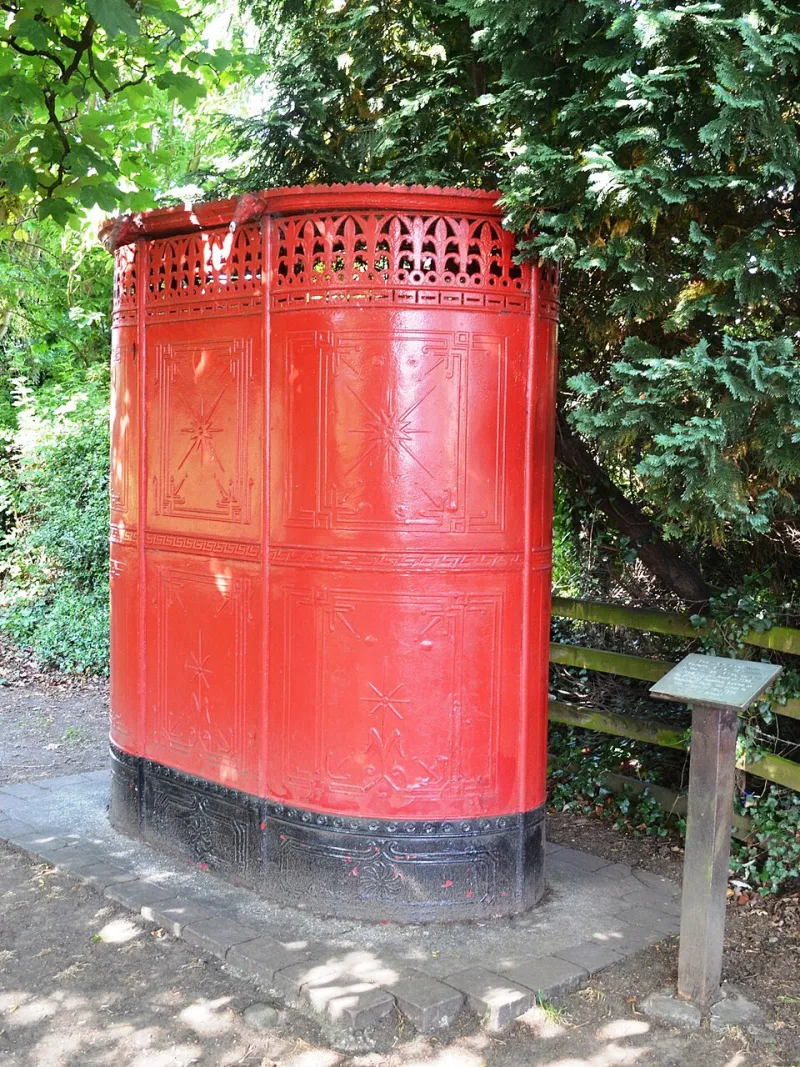
Photo: John M , CC BY-SA 2.0, via Wikimedia Commons
London does not usually advertise its plumbing. It hides it in plain sight: a cast-iron column on a pavement, a grille set into a kerb, a stone trough that looks like a horse fountain but once served a very different purpose. This two-hour loop from Borough to Bermondsey is a sanitation walk — less glamorous than a blue-plaque stroll, more revealing about how the city learned to breathe.
The route at a glance
Start outside St George the Martyr on Borough High Street. Head east on Tabard Street, north on Long Lane, dip under the railway towards Bermondsey Street, then follow Tanner Street, Jamaica Road and Tooley Street back to London Bridge. Give it two hours at an amble, with stops. Wear shoes you can stand around in. The walk is mostly flat, but the interesting bits are above eye level and under your feet.
Borough High Street and the cholera years
Borough High Street was once a corridor of coaching inns, crowded courts and no small amount of filth. In the 1840s and 1850s, Southwark was exactly the kind of place that made Victorian doctors nervous: dense housing, shared water supplies and drains that did more to move smells than sewage. The cholera outbreaks of the period turned public health from a matter of private misfortune into a municipal emergency.
Stand outside St George the Martyr and look at the pavement rather than the church. The street is full of small functional details — ventilation covers, inspection plates, drainage grilles — that are the descendants of that emergency. They are not monuments. They are working parts of the city, which is why they are so easy to miss.
Tabard Street and the stink pipe hunt
Walk east along Tabard Street and start looking up. A stink pipe is a tall, cast-iron ventilation pipe, usually with a crown or mushroom cap, designed to let foul air escape from the sewers above head height. They were never decorative, though some of them are oddly handsome. Many have been removed, but survivors often cling on near old sewer lines, railway embankments and the edges of parks.
If you see a tall, lonely pipe with a fancy hat, you have found one. Do not climb it. Do not lean on it. Just appreciate the logic: the Victorians knew that smells were a problem, and they built a piece of street furniture to deal with it. The stink pipe is the street equivalent of a deep breath.
Long Lane and the washhouse memory
Continue north on Long Lane, where the old Bermondsey trades begin to crowd in. This was leather country, and leather needed water, labour and somewhere to clean up afterwards. Victorian public baths and washhouses were built under acts of Parliament that tried to make cleanliness a public service rather than a private luxury. Women took in washing; families used the baths; the buildings themselves were often tiled, airy and rather grand in a utilitarian way.
Most of the old washhouses are gone or changed beyond recognition. Look for glazed brick, high windows, stone lettering and doors that seem too big for their current job. A former baths building might now be a gym, a set of flats or a community hall. The function has changed; the fabric often lingers.
Bermondsey Street and the public lavatory question
Bermondsey Street is a good place to think about the public convenience. Victorian London had a complicated relationship with the public lavatory: it was necessary, expensive and often buried underground. Some were built with cast-iron urinals above ground; others were discreet descents with railings. Many have been closed, filled in or repurposed as storage.
As you walk, look for low stone shelters, railed openings and odd little structures that do not quite fit the shopfronts around them. Not every one is a former lavatory, and that is part of the game. The sanitation walk rewards a certain willingness to be wrong in public.
Tanner Street and the sewer lamp
Turn towards Tanner Street and Jamaica Road, where the infrastructure becomes bigger and less visible. Sewer ventilation lamps were a clever Victorian hybrid: a lamp column that also acted as a vent, burning gas to draw foul air up and away. The most famous survivor in London is not in Southwark, but the principle is all over the city. Look for lamp columns with unusually thick bases, or grilles at the bottom of otherwise ordinary street furniture.
You will not find a working sewer lamp on this route. That is the point. The walk is about noticing the systems that replaced the oddities — the sealed drains, the pumping stations, the great intercepting sewers that run under roads like Jamaica Road. You cannot see them, but you can read their presence in the width of the road and the placement of vents.
Tooley Street and the river that took the rest
Finish by heading west along Tooley Street towards London Bridge. The Thames was London's original drain, and the Victorian sewer system was built partly to stop the river from being the final destination for everything the city flushed away. The Embankment, the outfall sewers and the great pumping stations were all part of that story.
Stand on London Bridge at the end and look down. The water looks ordinary enough. But the walk you have just done is a reminder that the city's health was never solved by one grand gesture. It was solved by pipes, vents, lamps, washhouses, drains and a lot of unglamorous maintenance. The pavements of Southwark are still holding the evidence.