The City’s Borrowed Minutes: A Clock-Watcher’s Walk from St Paul’s to Leadenhall
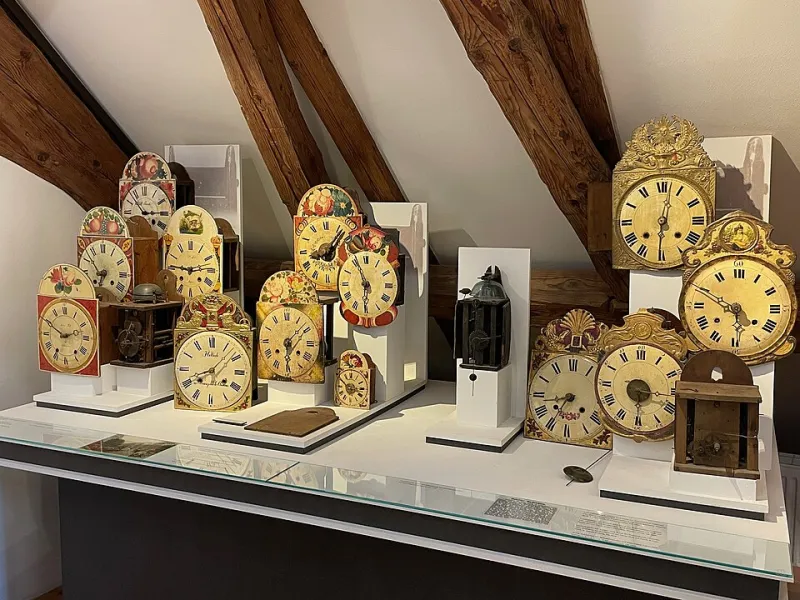
Photo: Klosterhoefler, CC0, via Wikimedia Commons
Most London walks chase buildings. This one chases hands. Start at St Paul’s, finish at Leadenhall, and you can cover roughly two miles in two hours without hurrying. The trick is to keep looking up. London’s public clocks are easy to ignore until you notice how many of them disagree, how many have lost their minute hands, and how many are attached to institutions that once wanted you to know exactly what time it was.
This is not a walk about punctuality. It is a walk about power. A clock on a church tower, an exchange or an insurance office is a small public statement: this is the hour, and we are the people who say so.
Start at St Paul’s: the clock as civic furniture
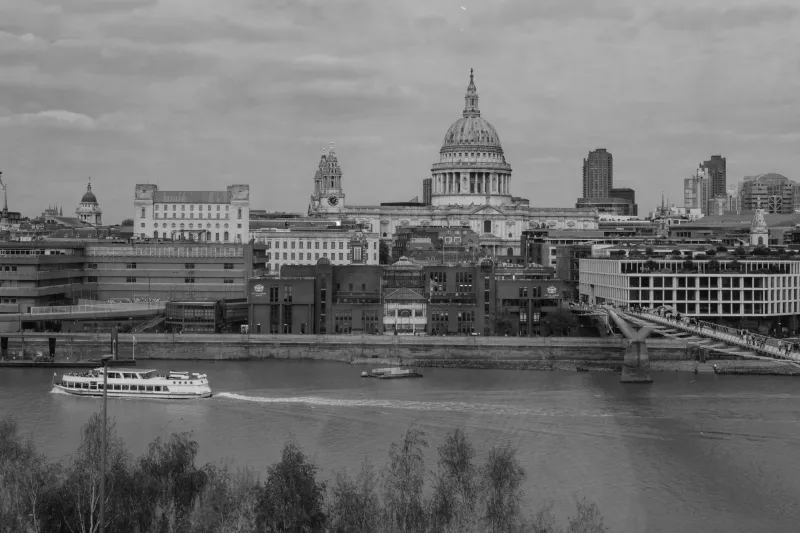
Stand on the west steps of St Paul’s Cathedral and look up before you look in. The cathedral’s west-front clock is a handsome piece of stone-faced ceremony, the sort of clock that tells you the hour rather than fussing over the minute. That is a useful clue. For most of London’s history, public clocks were not wristwatches writ large. They were civic furniture: expensive, visible and often a little approximate.
Walk through St Paul’s Churchyard and down Cheapside. This was once a street of watchmakers, clockmakers and men who could sell you a sundial and an argument about the correct time in the same breath. The old trades have mostly gone, but the street still has the right atmosphere for looking at dials. Keep an eye out for older shopfronts and signs; clockmakers’ names survive in odd corners of the City, even when the workshops do not.
Cheapside and St Mary-le-Bow: parish time
St Mary-le-Bow is the first proper stop. The church is famous for its bells, but its tower clock does quieter work. Before standard time, each parish kept its own local time, set roughly by the sun. Noon in Bow was not exactly noon in Westminster, and nobody expected it to be. The difference was small, but the principle was not: time belonged to the place.
Stand on Cheapside and imagine the street before the railways. The bells told you when to pray, when to open and when to close. The clock told you the hour, but the hour was a local agreement. If you were walking from one parish to the next, you were also walking between slightly different versions of the day.
The Royal Exchange: railway time arrives
Carry on through Poultry and Bank to the Royal Exchange. The exchange clock was a commercial metronome. Merchants set their watches by it, or at least claimed to. Money likes a shared clock, and the City was full of people who needed to know when the market opened, when the post left and when a bill fell due.
Then the railways broke the old local peace. By the 1840s, trains were running on railway time, a standardised hour that did not care about parish boundaries. A passenger could leave on railway time and arrive to find a local clock still keeping solar time. The confusion was real enough that public clocks were gradually adjusted, and Greenwich Mean Time became the legal basis for time in Britain in 1880.
The Royal Exchange is a good place to feel that shift. The clock above you is not just decorative. It is part of the long argument about whether London’s time should be local, national or commercial. The answer, increasingly, was all three at once.
Lombard Street and Leadenhall: office time
Drop down Lombard Street towards Leadenhall. This stretch is less about worship and more about work. Banks, insurance offices and counting houses wanted their staff to arrive on time, their clerks to stay on time and their rivals to know they were on time. The office clock became a small instrument of discipline.
Pause at St Mary Woolnoth, where the tower gives you another chance to think about parish time giving way to something more bureaucratic. Then finish under the iron roof of Leadenhall Market. The market clock is less a scientific instrument than a stage prop: a bit of Victorian confidence above the crowds. That is the right note to end on. London’s public clocks are not just timekeepers. They are survivors of a century-long argument about whose time counts.
What to look for between the stops
- Clock faces with no minute hands. These are often older than they look, and they remind you that public time was once coarser.
- Chimes. Listen for them rather than photographing them. A bell is a public clock you can hear before you see.
- Old clockmakers’ signs and shopfronts. The City has lost most of them, but the odd survivor is worth a pause.
- Clocks that disagree. Compare your phone with each dial. The gap is not always neglect; sometimes it is the history.
- The buildings around the clocks. A clock on a church says something different from a clock on an exchange or an office block.
Route at a glance
- Start: St Paul’s Cathedral, west steps. Tube: St Paul’s.
- Via: St Paul’s Churchyard, Cheapside, St Mary-le-Bow, Poultry, Bank, Royal Exchange, Lombard Street, St Mary Woolnoth.
- Finish: Leadenhall Market. Tube: Bank or Monument.
- Distance: about two miles. Allow two hours with stops.
- Best time: Saturday morning, when the City is quiet and the clocks feel more like objects than background. A weekday lunchtime gives you the office-time atmosphere, but fewer clear views.
- Bring: a watch or phone, a willingness to look up and no strong feelings about punctuality.
The route is mostly flat and follows pavements, but the City is busy and some church interiors keep limited hours. Check opening times before you plan a detour inside. And do not worry if a clock has stopped. In a walk about borrowed minutes, a stopped clock is not a failure. It is an exhibit.