Where the Watermen Waited: A Riverside Ramble Through London's Vanished Ferry Stairs
Photo: Malcolm Neal , CC BY-SA 2.0, via Wikimedia Commons
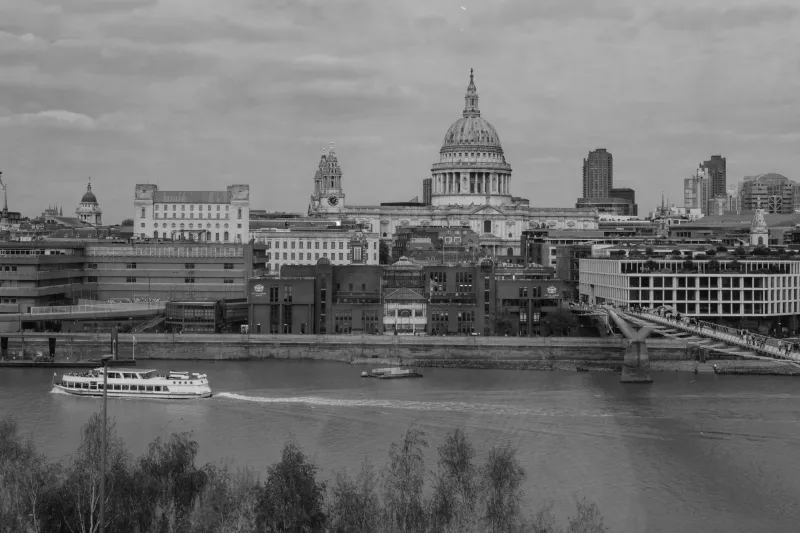
London has a habit of keeping its old infrastructure as a street name and quietly hoping nobody asks. Nowhere is this more true than along the Thames, where the city's oldest transport network — the ferry — survives mostly as a few worn steps, a lane that stops at a wall, and a word on an A–Z.
For centuries, if you wanted to get from one bank to the other you found a waterman. Thousands of them worked the river, rowing wherries and tilt-boats, arguing over fares, and — in the case of the Doggett's Coat and Badge race, first rowed in 1715 and still going — competing for a scarlet coat and a silver badge. Then came the bridges, then the tunnels, and the trade drained away.
This walk follows what's left. It's about five miles, mostly flat, and best done on a dry weekend with a decent pair of shoes and a vague tolerance for riverside wind.
Westminster: the crossing a bridge killed
Start on the north bank at Westminster, where the old Westminster Stairs once put you down at the water's edge. The ferry here was the busy, impatient heart of the crossing trade, shuttling passengers between the palace and the Lambeth bank. Westminster Bridge opened in 1750 and did to that ferry what the railways later did to the stagecoach.
Walk south along the river and then turn inland briefly for Horseferry Road — arguably the best surviving fossil on the whole route. This was the approach to a ferry that carried horses and livestock across to Lambeth, thought to be the only horse ferry in the country. The animals are long gone; the street name is not, and it's now more associated with government offices than with nervous cattle.
Rejoin the river at Lambeth Bridge and look back at the sweep of the water. Stand still for a minute and you can almost see the queue of wherries. Almost.
Bankside: where the theatre crowd came ashore
Head east along the south bank towards Bankside. This stretch was ferociously busy in the seventeenth century, when the playhouses pulled in crowds who arrived by boat rather than risk the marshland roads. Paris Garden Stairs and the various landing places around here fed audiences to the Globe and the Rose.
Look for the word 'stairs' on modern signage — it's a reliable marker of a former landing point. The Thames Path has done a decent job of flagging these, but half the pleasure is spotting them yourself: a narrow gap between buildings, a set of steps heading down towards a locked gate, a slipway that now leads only to a mooring ring.
The City's forgotten landing places
Across the water, between Blackfriars and the Tower, the north bank is dense with them: Old Swan Stairs, Trig Stairs, Bull Wharf, a scatter of names that meant something specific to a waterman and mean nothing at all to a commuter with a coffee.
Cross at Blackfriars or London Bridge and wander the north bank instead. The City has rebuilt itself so thoroughly that the stairs often feel like an afterthought — a flight of steps tucked beside a glass office, leading to a gate with a Port of London Authority padlock on it. That's the story in miniature: the river is still there, the access is still there, the trade isn't.
Rotherhithe: the ferry that a tunnel finished off
Finish downstream. The crossing between Wapping and Rotherhithe was one of the busiest on the river, and it met its end under the Thames in 1843, when Brunel's Thames Tunnel opened. You can still ride through it — it's now part of the London Overground between Wapping and Rotherhithe — which makes for a pleasingly odd end to a walk about boats.
On the Rotherhithe side, King's Stairs and the lanes behind the Mayflower pub give you the right flavour: a riverside village that was always more working port than picturesque. The Mayflower's association with the 1620 voyage is well worn, but the pub's position above the old landing steps is the real point of interest here.
Walking it
- Start: Westminster station, north bank of the Thames.
- Route: Westminster → Horseferry Road → Lambeth Bridge → south bank to Bankside → London Bridge → north bank through Wapping → Rotherhithe.
- Distance: roughly 5 miles, 2.5 to 3 hours without stops, longer with pub breaks.
- Finish: Rotherhithe Overground, or the Thames Clipper from Rotherhithe if you'd rather go home by water — which feels like the correct choice.
Two practical notes. First, check tide times if you're tempted to look at the foreshore: the Thames rises fast and the mud is not a playground. Second, a fair number of the old stairs are gated or on private wharves — admire from the path rather than testing the padlock.
And if you want the living version of everything this walk is about, the Woolwich Ferry still runs, free, further downstream. It's the last of the line, and it's worth the trip just to stand at the rail and think about all those watermen who got there first.