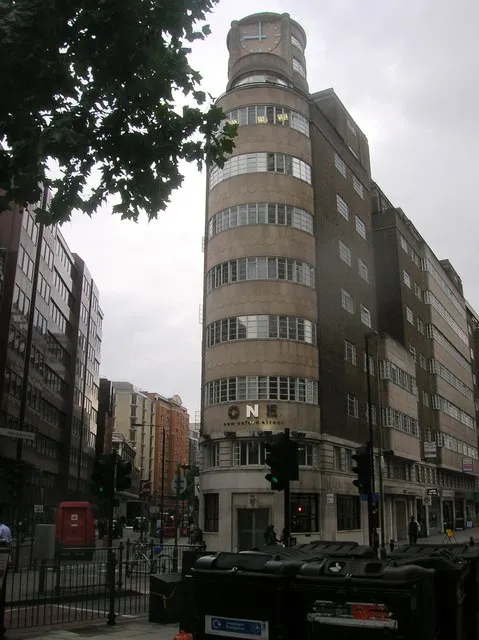
Ghost Doorways: A City and Holborn Detective Walk Past Closed Station Entrances
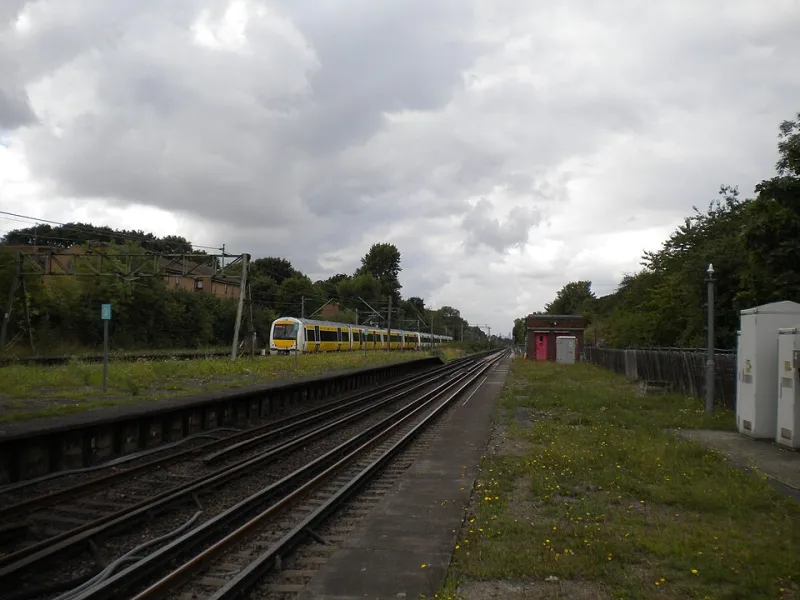
Photo: Richard Vince , CC BY-SA 2.0, via Wikimedia Commons
The best London walks often begin with a stupidly simple question: what is that doorway for? This route asks it repeatedly. Between Holborn and the City, ordinary office streets contain the surface traces of stations that were closed, rebuilt or swallowed by newer lines. Some entrances are obvious; others are just a blocked arch, a ventilation grille or a patch of stone that does not quite match its neighbours. Bring archive photos on your phone, wear comfortable shoes and prepare to look up, down and sideways.
This is not a tunnel tour. It is a surface-level detective walk through architecture, signage and street pattern. Allow about two and a half hours for the full loop, including pauses to compare old maps.
Clue one: High Holborn and the British Museum station
Start at Holborn station and walk west along High Holborn. The Central line here has a ghost in its early history: British Museum station, which opened in 1900 and closed in 1933. It sat between Tottenham Court Road and Chancery Lane, close enough to its neighbours to become redundant when the line's stations were rebuilt and the walking public chose newer entrances.
The station buildings are gone, but the street still gives you the detective's first lesson: a station is not only a hole in the ground. It is a pattern of pedestrian habits. Look at the width of the pavement, the corner plots, the service doors and the way buildings meet the back edge of the road. Compare the present street with an old Ordnance Survey map or a London Transport Museum photograph. The ghost is in the gaps between what is there and what used to be.
Clue two: Post Office station and the invisible ticket hall
Continue east towards St Paul's and the City. Post Office station was another Central line casualty, closed in 1933. Its name tells you what the area was: a communications district, busy with mail and messengers. The station entrance was not a grand terminus but a city doorway, the kind of thing you could pass every day without noticing.
This is where the walk becomes architectural. Closed station entrances often survive as changes of level, blocked openings or strangely deep doorways. Look for a facade that seems to have been punched through and then patched up. Look for stone steps that lead nowhere, or a doorway set below pavement level as if waiting for a ticket window. Do not expect a sign saying 'ghost station'. The clue is usually the awkwardness of the building — the place where the street grid and the railway grid failed to agree.
Clue three: King William Street and the first City terminus
Head down towards Bank and Monument. King William Street station was the original northern terminus of the City and South London Railway, the line that became part of the Northern line. It opened in 1890 and closed in 1900 when the line was extended to Bank. The station was cramped, curved and not built for the traffic that followed.
The surface remains are not a theme park. They are fragments absorbed into later buildings and street works. Stand at the corner of King William Street and look for blocked arches, heavy stonework and service entrances that feel older than the offices around them. The lesson here is about power: railway companies did not just build stations, they reshaped streets, demolished corners and created new pedestrian flows. When the station closed, the architecture did not vanish overnight. It was reused, filled in and built over.
Clue four: Snow Hill and the Holborn Viaduct railway
Walk west towards Holborn Viaduct. The Victorian viaduct itself is a piece of railway architecture in plain sight, and it belongs to the story of Snow Hill and Holborn Viaduct station. The mainline station closed in 1990, replaced by City Thameslink, and the area has since been redeveloped around the same transport corridor.
Look at the viaduct's arches, parapets and staircases. This is a useful contrast with the Underground ghosts: mainline stations leave bigger urban footprints, but they can still disappear from everyday memory. Ask what a station entrance does to a street. It creates a little eddy of foot traffic, a newsagent, a taxi rank, a pub. When the entrance goes, those habits rearrange themselves. The architecture remains as a set of clues about movement that no longer happens.
Clue five: Aldwych, the star ghost
If you have time, extend south to Aldwych. The station closed in 1994, and its Strand entrance is one of London's most recognisable disused station fronts. It is not quite in the City or Holborn, but it makes a satisfying finale: a ticket hall that looks ready for passengers, except that the passengers stopped coming decades ago. The station has been used for filming and training, which is another kind of afterlife. Architecture rarely stays empty; it gets cast in new roles.
How to read a ghost entrance
First, carry a old map. The National Library of Scotland's online map collection is excellent for comparing street patterns. Second, look for ventilation grilles, tiled fragments and deep light wells. Third, notice where pavements widen or narrow for no obvious reason. Fourth, read the building's awkward joins: a blocked arch, a mismatched brick, a doorway that sits too low or too high. Fifth, remember that closures were rarely romantic. They were commercial decisions, wartime emergencies, rebuilds and rationalisations. The ghosts are bureaucratic as well as atmospheric.
Do not trespass, do not duck under barriers and do not treat every locked door as an invitation. The pleasure is in the looking, not the entering.
Practical notes
Start: Holborn station. Finish: Bank or Monument, with an optional extension to Aldwych. Distance: about 2.5 to 3 miles. Time: two and a half hours. Terrain: city pavements, crossings and a few slopes. Best on a weekday evening or a quiet Sunday, when the office streets are empty enough to notice details. Bring a charged phone, a old map screenshot and a willingness to stand still in front of buildings that everyone else ignores.