Letters That Outlived the Shop: A Ghost-Sign Safari from Farringdon to Soho
There's a particular kind of Londoner who walks down a street looking at knee height, or forty feet up, or at the join between two buildings — never at the shop they're supposedly heading to. They're ghost-sign hunters, and once you've spent an afternoon doing it, you'll never look at a brick wall the same way again.
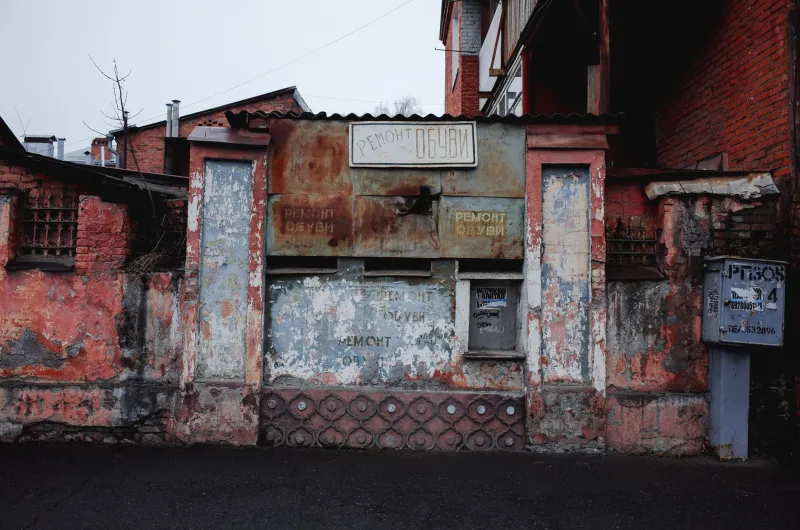
A ghost sign, for the uninitiated, is a hand-painted advertisement that has outlived the business it was selling. A grocer's name above what is now a vape shop. A flour brand on the flank of a converted warehouse. Full names, trade descriptions, phone numbers with two digits, all slowly surrendering to weather and render. They're a form of accidental heritage: nobody protected them, which is precisely why they feel like a find.
This route runs from Farringdon's edge east and then west into Soho, taking in roughly two and a half miles in about two and a half hours at a dawdle. It's flat, entirely doable in trainers, and best walked between November and February, when the sun sits low and rakes across the brickwork at an angle that makes half-erased lettering suddenly legible.
The Rules of the Game
Before you set off, learn what you're actually looking for. A genuine ghost sign is painted directly onto masonry or timber, then revealed by age rather than design. The tells:
- Layering. Old walls were repainted, not cleaned. Look for one advert ghosting through another, or a later hand-lettered price slapped over an older brand name.
- Straight-to-brick lettering. No backing board, no frame, no visible fixings. The paint sits in the mortar's grain.
- Faded but formal typography. Victorian and Edwardian signwriters worked from pattern books: fat slab serifs, confident drop shadows, generous spacing, occasionally a painted flourish or a gilded border.
- Trade language. "Late of", "Established 1874", "Families Supplied", "Contractor to H.M. Government". This is the vocabulary of a firm advertising permanence.
What you're not looking for: vinyl reproductions on new-build flats, deliberately distressed pub signage, or anything that looks too crisp. Nostalgia-bait is everywhere now. The real thing always looks slightly embarrassed to still be there.
The Route, in Five Legs
Leg one — Cowcross Street to Turnmill Street. Start outside Farringdon station and head north-west. This pocket of Clerkenwell was printing, brewing and light engineering, which means the walls carry a lot of trade signage aimed at people who worked with their hands. Walk slowly, look up between the first and third floors — that's the classic advertising band, high enough to be seen down the street, low enough to be painted from a ladder.
Leg two — Clerkenwell Road, east then back west. A long, straight, generously proportioned street with plenty of surviving shopfronts. Watch for the palimpsest effect here: several walls show a former grocers' or provisions sign with a later, cheaper coat of paint flaking off the top of it. The building stock rewards a slow walk, and there are enough cafés to break the trip.
Leg three — across to Holborn and down into Seven Dials. The stretch between Clerkenwell and Covent Garden thins out the ghosts a bit, which is fine — it gives your eyes a rest and lets you notice the difference between a painted sign and a modern mural pretending to be one. Around Seven Dials and Neal Street, look up above the independents; this area's retail churn means old names survive above new ones constantly.
Leg four — Charing Cross Road to Soho's eastern edge. Bookshops, music shops, instrument dealers. Look for signage referring to trades that have vanished outright — mantle manufacturers, artificial florists, firms advertising "electric bells". The lettering here often includes a street number that no longer exists in that form, which is its own quiet joke.
Leg five — Berwick Street, Wardour Street, Dean Street. Finish in the thick of it. Soho's ghosts are smaller, more commercial and more battered: restaurant and café signs, a tailor's name, drinks brands painted on the flanks of corner buildings. Take Berwick Street slowly, and don't forget to look at the sides of buildings rather than their faces — the best signs were painted for sideways sightlines, visible to anyone walking along the pavement.
What the Paint Is Trying to Tell You
Read a ghost sign properly and you get a short economic history of the street. The words "late of" mean the firm had moved and wanted you to follow. "Established" dates are there to reassure you the business wasn't fly-by-night. A painted telephone number starting with two letters — CLERKENWELL, HOLBORN — places the sign before the all-figure numbering that arrived in the late 1960s, which gives you a rough terminus ante quem for the last repaint.
You'll also notice what's missing. Very few ghost signs advertise luxuries. They advertise candles, soap, tea, sauce, boot polish, cigarettes, ales, sewing machines, seeds, tonic wine and newspapers. The ordinary commerce of a dense walking city, selling to people who passed the same wall five days a week.
And they are going. Render fails, brickwork gets repointed, developers decide a clean facade lets better, and a coat of masonry paint ends a hundred-year run in an afternoon. Several signs that were photographed a decade ago are now blank. This isn't a reason to be gloomy about London so much as a reason to look properly, now.
Timing It Right: Low-Sun Tactics
Winter is your friend, but only in a narrow window.
- Aim for 10am–2pm. Low sun needs to hit a wall at a shallow angle; that's when the raised edges of old paint and the ghost of a second layer throw a micro-shadow.
- Choose a dry, bright day after rain. Wet brick darkens and flattens everything. Dry stone with a bright low sun is the money shot.
- Work the sunny side of the street first. On an east–west street in the morning, the north-facing walls are in shade — useful for seeing colour without glare, useless for texture. Do the shaded side going one way, the lit side coming back.
- Bring binoculars or use your phone's zoom as a spotter's scope. Half the skill is confirming that a smudge two floors up is actually lettering before you commit to staring at it.
- Don't rely on a filter. Slight contrast bump, that's all. Anything more and you're painting the sign yourself.
The Camera Manners Bit
These walls are somebody's home or somebody's livelihood, and ghost-sign hunters have a bad habit of behaving like the street is a free museum.
- Shoot from the public pavement. No doorways, no forecourts, no fire escapes, no standing in the road for the angle.
- Ask before photographing anything above a working business, especially in Soho where the pavement is narrow and the staff have seen a thousand lenses this week.
- No flash through windows, ever.
- Don't crop out the building. A ghost sign without its wall is a graphic, not a record — and the wall is what's about to change.
- Keep your voice down. Two people chatting about typography outside a flat at 8am on a Sunday is not the innocent activity you think it is.
- If someone asks what you're doing, tell them. Nine times out of ten you'll get a story about the shop that used to be there, which is better than the photograph.
Practicalities
Farringdon is the obvious start (Thameslink, Circle, Hammersmith & City, Metropolitan) and you can bail out at any point via Chancery Lane, Covent Garden, Tottenham Court Road or Piccadilly Circus. There are no tickets, no opening hours and nothing to book. Wear something you don't mind getting splashed by a bus, bring a charged phone for the zoom, and give yourself permission to stand still for four minutes at a time, looking up, in a way that would be strange anywhere else in London and is completely normal here.