Red Boxes and Underground Trains: A Postal Ramble from Mount Pleasant to King’s Cross
Most London walks follow buildings. This one follows letters. Or rather, it follows the places where letters were gathered, sorted, loaded and finally dropped into a box. The route from Mount Pleasant to King’s Cross is short enough for a weekend afternoon, but it opens up a whole parallel city: one of tunnels, sorting halls, chutes, cyphers and collection plates. You do not need to be a postal obsessive to enjoy it. You just need to start looking at street furniture that most people walk past without a second glance.
Start where the letters still gather
Begin on Rosebery Avenue, outside the Mount Pleasant sorting complex. This is not a pretty building in the postcard sense, but it is a proper London landmark: a great slab of postal infrastructure that has been handling mail for generations. The site’s scale is the first clue. Mail is not just posted and delivered; it is funnelled through enormous buildings, sorted at speed and moved on again. Stand back for a moment and watch the vans and loading bays. Even in an age of email and next-day parcels, this place still feels like a working lung for the city.
The Postal Museum sits nearby, and its Mail Rail ride is the star attraction for anyone who wants to go beneath the surface. The little electric trains once carried letters through tunnels under London, linking sorting offices and railway stations. The system opened in the 1920s and kept running until the early 2000s. Today the ride is a heritage experience, but it is also a reminder that London’s postal geography has always been partly underground. The streets above and the tunnels below were designed to work together.
Follow the ghost line to Phoenix Place
Walk along Phoenix Place and let the sorting site recede. This is where the walk becomes a detective story. The Mail Rail tunnels are not visible, but their presence lingers in the shape of the streets and the backs of buildings. Look for service yards, ventilation grilles and the kind of unglamorous edges that usually go unnoticed. Postal infrastructure is often like that: essential, hidden and slightly mysterious.
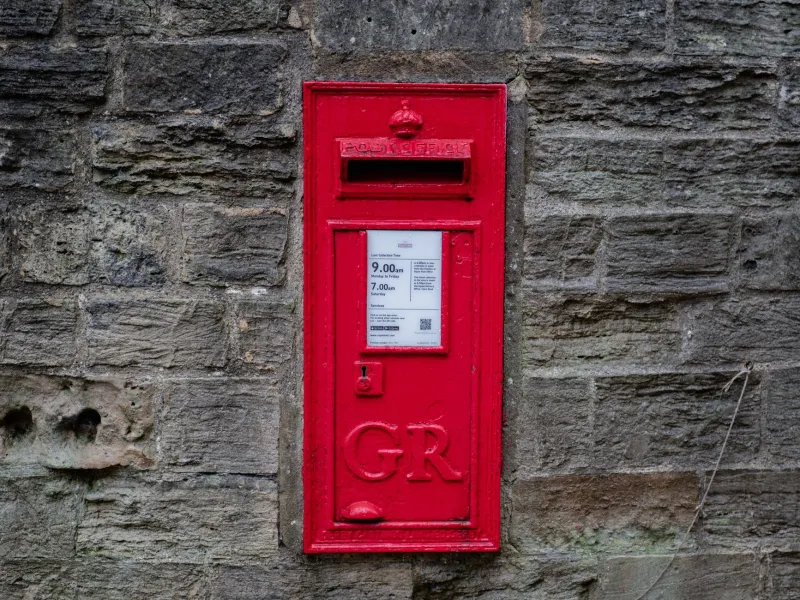
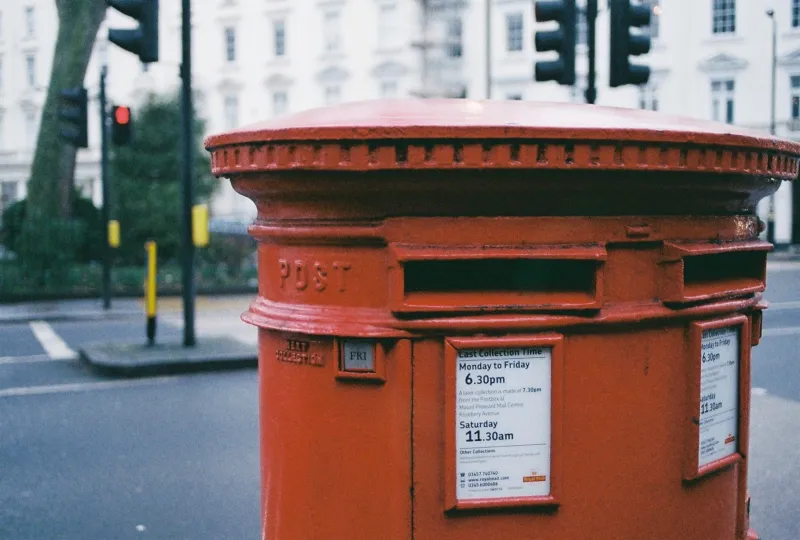
This is also a good stretch for noticing letter boxes properly. A red pillar box is not just a red pillar box. Look at the door. The royal cypher tells you when the box was made, or at least which monarch was on the throne when it was cast. You will see VR for Victoria, GR for George, ER for Elizabeth and, on newer installations, CIIIR for Charles III. The lettering is small, but once you know what you are looking for, it turns an ordinary pavement object into a dated document. Wall boxes and lamp boxes have their own stories too. Some are set into brickwork; others cling to posts at improbable angles. Each one was placed because the Post Office thought people needed it there.
The chutes, slots and plates that give the game away
Keep an eye out for the smaller details. Collection plates tell you when the next pick-up is due, and their design has changed over the decades. Older boxes may still carry faded lettering or a slightly different shade of red. Slots vary in height and width, often because they were designed for a different era of envelopes and parcels. Some postal buildings have chutes or hatches where sacks could be tipped or loaded. These are the sort of features that blend into a wall until you start hunting for them.
The walk is not about ticking off a list of famous boxes. It is about learning a visual language. Once you have spotted one cypher, you will start spotting them everywhere. Once you have noticed one collection plate, you will wonder why some are so much more battered than others. That is the pleasure of a curiosity-led walk: the city becomes denser, not because new things appear, but because old things come into focus.
King’s Cross and the age of the mail coach
Carry on towards King’s Cross Road and the streets around the station. Before the railways, long-distance mail moved by coach, and London’s coaching inns were the nodes of the system. Mail coaches left from inn yards, changed horses and rattled out of the city on turnpike roads. The King’s Cross area was reshaped dramatically by the railways in the nineteenth century, but the older logic of movement is still there in the network of yards, side streets and station approaches. When the railways arrived, they took over much of the mail traffic and changed the pace of everything. Letters that once travelled by horse and guard now travelled by steam and sorting carriage.
Finish near King’s Cross station, where the modern city is at its most restless. It is a fitting endpoint. The postal story is not a museum piece; it is a story of constant adaptation. Mail moved from coaches to railways, from railways to tunnels, from tunnels to vans and now to a mixture of everything at once. The red boxes remain, but the system behind them has never stood still.
Practical notes for the walk
Allow around two hours at an easy pace, plus extra time if you want to visit the Postal Museum or ride Mail Rail. The route is mostly on pavement, with a few busy road crossings. Weekday mornings are livelier if you want to see the sorting site in action; weekends are quieter for letter-box spotting. Bring a phone for map checks, but try to look up as much as possible. The best clues are above waist height and below eye level: cyphers on doors, plates on posts, old lettering on walls. Finish with a coffee near the station and a new habit of reading the street.