Stumps in the Stonework: A Weekend Railing Detective Walk from Bloomsbury to the City
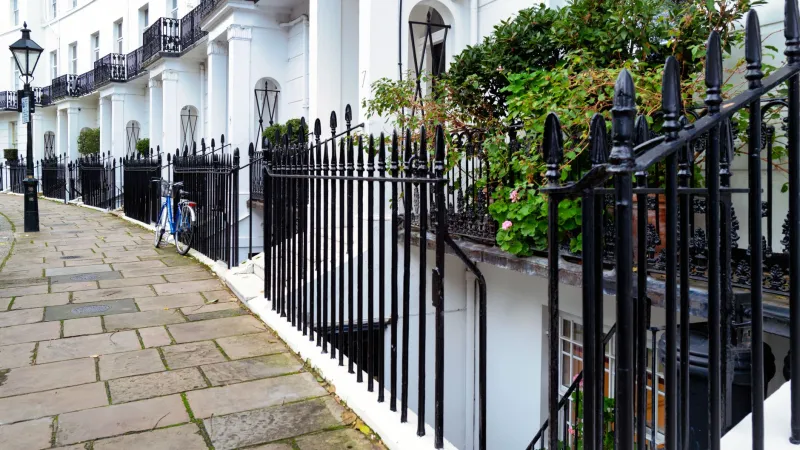
London has a habit of leaving its history at ankle height. You see them on the edges of squares and churchyards: short iron stumps, sometimes no taller than a mug, set into stone plinths. They look like unfinished railings, or a job abandoned at lunchtime. In fact many are the remains of railings removed during the Second World War, when the government appealed for scrap metal. This walk follows those stumps from Bloomsbury to the City, roughly 2.5 miles, and turns a normal Saturday potter into a small act of detection.
Start with the myth, not the metal
The popular version is simple: London’s railings were melted down to build Spitfires. It is a good story, and it has been repeated so often that it has hardened into fact. The truth is messier. From 1940, the Ministry of Supply ran a national appeal for iron and steel scrap, and local authorities organised removals from parks, squares, gardens and churchyards. Some of that iron did go into the war effort. But plenty was unsuitable, inconvenient or simply not needed. Some railings were stored, some were dumped, and some were left in place because removing them would have caused more trouble than the metal was worth. So when you see a row of stumps, you are looking at evidence of a wartime policy — but not necessarily at a Spitfire in waiting.
That distinction matters. It keeps the walk honest. You are not hunting for a single triumphant narrative; you are reading a landscape of uneven decisions, local arguments and post-war repairs.
How to read a railing stump
The first clue is the cut. Wartime removals often left the railings snapped or cut off close to the base, rather than carefully unscrewed. Look for jagged edges, rough tops, or a stub that has been capped with lead or mortar. A second clue is repetition: a long run of identical stumps along a wall or garden edge is much more suggestive than one isolated post. Third, look at what sits above the stump. If the railings were replaced later, the new ironwork may be a different pattern, a different thickness, or set in fresh stone.
Empty plinths are just as useful. A stone pier with no gate, a gap between two sturdy posts, a hinge mark on a wall: these are the quiet bits of evidence. Orphaned gates are the best of all — a gate that now opens onto nothing, or a gate fixed to a wall with no fence either side. They are the street furniture equivalent of a sentence missing its middle.
Be careful, though. Not every stub is a wartime scar. Railings have been removed for road widening, bomb damage, safety rules and simple decay. The fun is in comparing several sites and noticing what repeats. That is where the story starts to emerge.
Bloomsbury: squares, stumps and polite ironwork
Begin at Russell Square station and walk into the square itself. The garden has been altered many times, and its edges are a good place to start looking at how railings and stonework meet. From here, head west to Bedford Square, one of London’s best-preserved Georgian squares. The point is not to declare every gap a wartime loss; it is to slow down and notice the different ages of iron and stone. Some railings here are old, some are replacements, and some boundaries have been patched.
Continue to Bloomsbury Square, then loop towards St George’s Bloomsbury. Churchyards are especially rewarding because they often kept their original layout while the ironwork around them changed. Look at the bases of railings, the patched stone, the places where a gate pier stands a little too proudly. Then make for Lincoln’s Inn Fields. This is a good halfway pause: the square is large, the paths are clear, and the variety of boundaries gives you plenty to compare. If you have time, walk one edge slowly rather than cutting across.
Into the City: churchyards and orphaned gates
From Lincoln’s Inn Fields, head east via Chancery Lane into the City. The streets narrow, the pavements get busier, and the clues become smaller. St Sepulchre-without-Newgate is a useful stop: look at the churchyard edges and the way modern boundaries sit alongside older stone. Then push on towards Christ Church Greyfriars and Postman’s Park. These are not just pretty pauses; they are places where you can practise the same questions. Is that a cut stump or a later repair? Is that empty pier part of an old entrance? Why does that gate look as if it has lost its fence?
The City rewards close looking. A stub beside a churchyard wall, a line of filled sockets, a gate that now leads only to a bin store — these are the small traces that make the walk worth doing. Finish near St Paul’s, where the scale of the city returns, and treat yourself to a coffee while you compare notes.
Practical notes for the weekend
Allow two to three hours for the walk, plus stops. It is roughly 2.5 miles and mostly flat, but pavements are uneven in places. Start at Russell Square station and finish near St Paul’s; both are well served by Tube. Check churchyard opening times before you travel, especially at weekends, and remember that these are working spaces and public gardens, not a museum. Do not climb on stumps, pull at loose ironwork, or treat gated areas as a challenge.
Take a small notebook or use your phone to photograph details: cut tops, empty sockets, mismatched railings. The walk works best in daylight, and a weekday evening is not the time to peer into churchyards. As of 2026, some City churchyards have limited weekend access, so build in alternatives and enjoy the streets themselves.
The railings that never came back are not a single monument. They are a scatter of small, stubborn clues. Once you start noticing them, London becomes a little more legible — and your weekend walk a little more detective story than stroll.