The Lion, the Lawyer and the Dragon: A Stone-Beast Safari from Holborn to the Strand
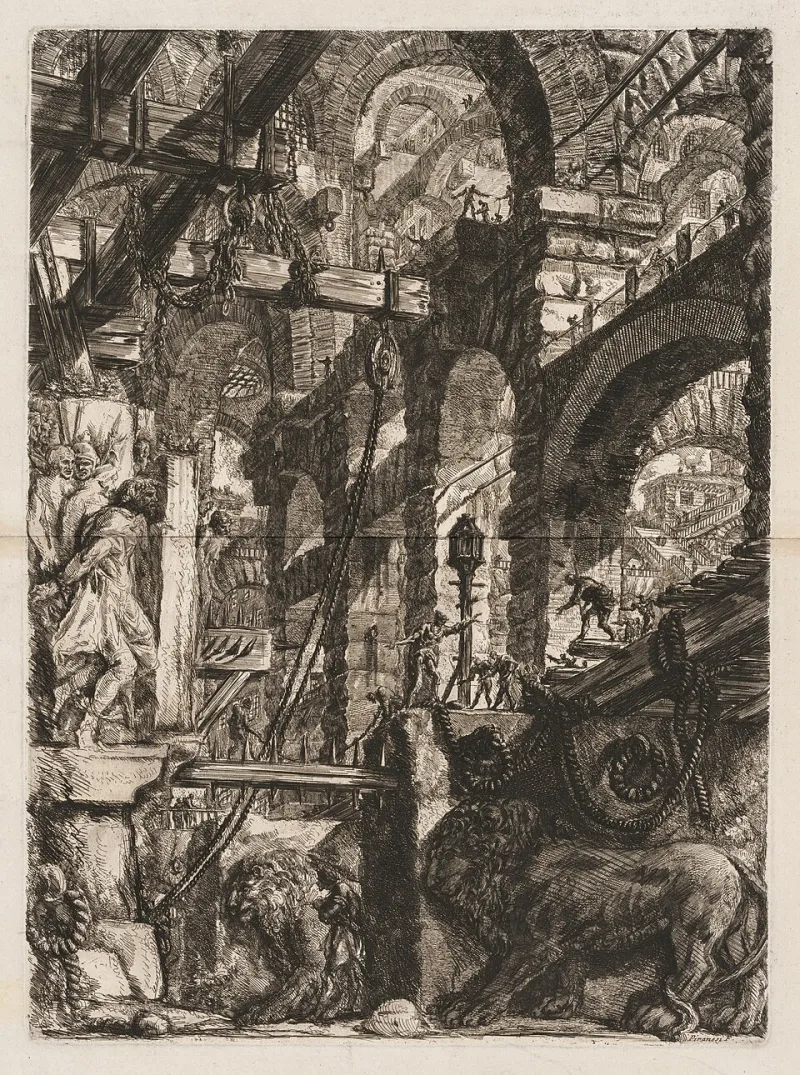
Photo: Giovanni Battista Piranesi, CC0, via Wikimedia Commons
London is not short of grand buildings. What it hides in plain sight is a zoo. Look above the shop signs and the bus stops and you will find lions with manes like fretwork, griffins with wings tucked into cornices, and dragons curled around dates and coats of arms. This two-hour walk from Holborn to the Strand is a bestiary for people who have already ticked off St Paul's and the Tower. It is flat, mostly pavement, and works best on a dry Saturday when the light is strong enough to pick out detail on a soot-darkened façade. Bring curiosity. Binoculars are optional but not ridiculous.
Start at Holborn: look up, not in
Come out of Holborn station and turn east along High Holborn, keeping the tube behind you. The first rule of beast-spotting is simple: ignore the ground floor. Shopfronts change, but first-floor level and above is where Victorian and Edwardian architects let their masons play. Look for carved keystones, capitals and spandrels. A face with leaves coming out of its mouth is a green man; a snarling cat with a foliate tail may be a lion doing heraldic duty. Both were cheap ways to add character to a commercial block.
Walk as far as Chancery Lane and turn right, heading south. The street narrows and the noise drops. This is lawyer country, and the beasts here are less gargoyle, more genealogical. Heraldry was the original corporate branding: a shield told you whose family, guild or institution you were dealing with, and the animals holding the shield told you what kind of power they wanted you to imagine. A lion meant courage and, in London, often empire. A unicorn meant Scotland. A griffin meant watchfulness, or simply that the mason had a good pattern book.
Chancery Lane and the Inns of Court: heraldry with teeth
Pause at the Lincoln's Inn gatehouse on the west side of Chancery Lane. The fabric is a Victorian rebuild of an older entrance, and the arms above the gate are the point: stone beasts folded into the composition rather than sitting on plinths. They are not there to frighten you. They are there to say that this is a boundary, and that the Inn has been here since the fifteenth century. The open gate is usually passable on weekdays; at weekends you may have to admire from the street.
Carry on south and turn right into Lincoln's Inn Fields, London's largest square. The fields were laid out in the 1630s and have survived attempts to build over them. On the north side sits Sir John Soane's Museum, a treasure house of architectural fragments where you can see how masons actually cut stone. On the south side is the Royal College of Surgeons, a neoclassical block with a restrained but rewarding set of carved details. Neither is a zoo in the literal sense. Both reward the habit of looking up and sideways rather than straight ahead.
Cross the fields diagonally towards the south-east corner and join Portugal Street, which leads to Aldwych. This is the transition zone: the Inns of Court give way to Edwardian commercial palaces and the theatreland edge of the Strand. The buildings get taller, the beasts get bolder, and the stories get more civic.
Aldwych to the Strand: commercial beasts and imperial lions
Aldwych was driven through the area in the early 1900s, which means many of its buildings are Edwardian set pieces. Look for animal heads on keystones and carved panels between windows. Insurance companies and shipping offices loved this sort of thing. A lion on a ledger was not decoration for its own sake; it was a promise of security, a visual guarantee that your money or your cargo was in safe hands. The same creature that guarded a medieval church porch could be repurposed to guard a boardroom.
Follow Aldwych east until it becomes the Strand. The Royal Courts of Justice appear on your left, and this is the headline act: a Gothic Revival bestiary in stone. George Edmund Street's building was completed in the 1880s and is covered in the kind of detail that Victorian architects loved and modern developers rarely pay for. Look for carved animals tucked into the crockets and capitals, and for grotesques that are more comic than terrifying. The Victorian Gothic revivalists did not invent the medieval bestiary, but they did turn it into a public lesson in law, empire and good behaviour.
The Royal Courts and the City dragon
Walk along the Strand front of the Royal Courts and take your time. The building is symmetrical enough to make you lazy, so pick a bay and study it properly. You will find lions and unicorns in the royal arms, and smaller creatures lurking in the foliage. These are not random. The royal arms carried the Union, and the beasts supporting them carried the message: authority, continuity, and the long reach of the law. The grotesques are the human comedy around the edges, the masons' jokes and warnings.
If you have another twenty minutes, cross to the south side of the Strand and walk east towards Temple station. The City of London boundary is close here, marked by the City's dragon. The dragon is the City's badge, and boundary markers used to do real work: they told you when you were leaving one jurisdiction and entering another. Today they are mostly ignored by commuters, which makes them perfect for a weekend walk. Look for the dragon on its plinth, wings stiff, holding the City's shield. It is a civic beast, not a church one, and it closes the walk nicely.
Practical map notes
Start: Holborn station, exit towards High Holborn and Kingsway. Walk east along High Holborn, turn right down Chancery Lane, pause at Lincoln's Inn gatehouse, then turn right into Lincoln's Inn Fields. Cross the fields to the south-east corner, follow Portugal Street to Aldwych, then keep east until the Strand. The Royal Courts of Justice are on the north side. Finish at Temple station or continue into the City.
Time: about two hours at a gentle pace, with pauses. Distance: roughly two miles. Terrain: flat pavement throughout. Best light: late morning or early afternoon, when the sun is high enough to reach upper storeys. Accessibility: step-free at the main points, though some pavements are narrow.
What the beasts are telling you
A carved animal on a London building is rarely just an animal. It is a signature, a warning, a joke, or a piece of civic theatre. Medieval masons used grotesques to mark the edges of sacred space. Heraldic beasts told you which family or guild owned the wall. Victorian architects used the same vocabulary to make banks look trustworthy and law courts look ancient. Once you start noticing them, the city stops being a backdrop and becomes a conversation. And the best part is that you do not need a ticket, a guidebook, or a dry day. You just need to look up.